

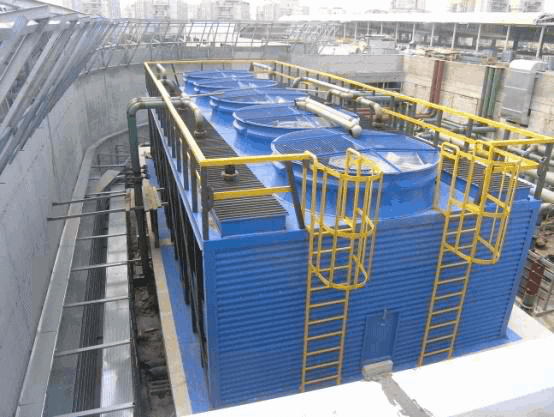
Those who run an industrial facility in India must be very clear about the role that cooling towers play in their activities, mainly during the summer season. However, when cold weather comes drop by drop, or especially in the case of the Northern region and places located above the sea level, it is necessary to change the strategy.
Don’t let the relatively mild climate fool you. A sudden cold snap or sustained low temperatures overnight can lead to catastrophic freezing, turning a simple piece of equipment into a very costly liability. This isn’t just about the weather; it’s about smart, year-round operation.
We need to talk about cooling tower winterization.
It’s just a simple, step-by-step cooling tower winterization checklist to keep your investment safe, not a complicated operation. This sure keeps your downtime to a minimum, efficiency to the maximum level, and repair costs to a low figure when spring comes.
Why Bother? The High Cost of Cold Weather Neglect
More specifically, water freezes and expands. And if the expansion takes place in the pipes, basin, or heat exchange surfaces of your cooling tower, it can result in metal being warped or PVC pipes breaking. That means leaks, structural failure, and immediate, unscheduled downtime.
The goal of this industrial cooling tower maintenance is simple: prevent damage to cooling towers during winter. Whether your unit is completely shut down or just running at a fraction of its capacity, you need a plan to prevent freezing in cooling towers. The process is part of good seasonal maintenance for cooling towers and will pay for itself many times over.
A strong, reliable cooling tower is key to your plant’s efficiency. Learn more about how these crucial components work on our main page: TowerTech Cooling Tower Solutions.
The Essential Winterization Checklist
Here is how to prepare a cooling tower for cold weather, broken down into simple, actionable steps. Use this as your definitive cooling tower maintenance checklist.
Phase 1: Preparation (For All Towers)
- Clean the house thoroughly: If you are considering changing the settings, the tower has to be very clean. Make the tank completely empty and flush it to get rid of sediment, scale, dirt, and debris. What has accumulated serves as insulation, thus it traps small parts of water that have a higher probability of freezing.
- Inspect Fill and Louvers: Examine the fill material for its condition. Check for any broken or missing pieces of the louver that permits the cold air, which is outside the normal flow path, to be in direct contact with the water and hence freezing is getting faster. Fix them or change them at once.
- Check Chemical Treatment: Adjust your water treatment program. If you are operating at low loads, chemical concentration changes. Corrosion inhibitors and anti-fouling agents can be adjusted for cold water conditions by your water treatment specialist. Don’t hesitate to call him.
Phase 2: Protecting Towers That Remain in Operation
For facilities that cannot fully shut down, the focus shifts to flow control and heat management. This is the art of cooling tower protection in winter.
- Keep Water Moving: Do not allow water to stand in the tower. If it is not necessary due to the load, still, run all parts of the tower for at least 30 minutes every few hours.
- Modify Fan Cycling: The fans are the main reason for the occurrence of freezing. When the temperature outside is around zero, it is better to switch off the fans completely and use a natural draft for cooling the water. In case cooling is still required, fans should be turned on and off quickly to allow warm water to circulate in the system.
- Employ Bypass Valves: In case your system is equipped with a bypass, use it to bring the warm discharge water from the condenser directly to the basin instead of over the fill. This helps to keep the temperature in the sump and water stays above zero.
- Monitor Sump Heaters: If you have them, test your sump or basin heaters now, before the cold hits. They are your last line of defence. Make sure their thermostats are working properly and that they switch on when the water temperature gets close to 4°C.
Phase 3: Get Ready for the Complete Power Off
When the cooling tower is going to be powered down for good, the first and foremost concern is to get rid of the water. This is how you completely prepare the cooling tower for winter.
- Complete Drainage: Drain the basin, the spray system, the cold-water piping, and the makeup lines. Open drain plugs on all pumps and low points in the piping system. It seems obvious, but water that has been overlooked in pockets is the major reason for the destruction.
- Air Purge: Following the drainage, an air source of very high pressure is to be used to blow out the water pipes, headers, and coils (in the case of closed-circuit towers, this is extremely important) so that no water is left that could freeze.
- Pump Isolation: Ensure that the power supply to all pumps is disconnected and that the pumps are turned off. In the best case scenario, take out the pumps and keep them indoors in a dry place. If they are to be stored outside, make sure that the pumps are fully drained and that they are covered tightly.
- Isolate and Tag: Close and tag all inlet and outlet valves. This prevents accidental filling or flow to a supposedly empty system.
Your Best Defence: The Annual Service Check
These necessary industrial cooling system winterization tips might just be a fresh breath of basics, but the truth is, each facility is different. The reality of pipe runs, valve locations, and local conditions requires expertise of a kind.
Generally, it is more convenient and safer to carry out the best winter maintenance practices for cooling towers along with a professional. If you are not familiar with the procedure, especially in the case of pump removal, electrical isolation or water treatment, it is always best to take the help of professionals. If you want a professional team to completely take over your cooling tower winterization or carry out an annual maintenance check, we would be happy to hear from you. Our service team can be reached at: TowerTech Cooling Tower Services. We’re here to help you get the job done right, so your system is ready for the cold and fully operational when the weather warms up again.