

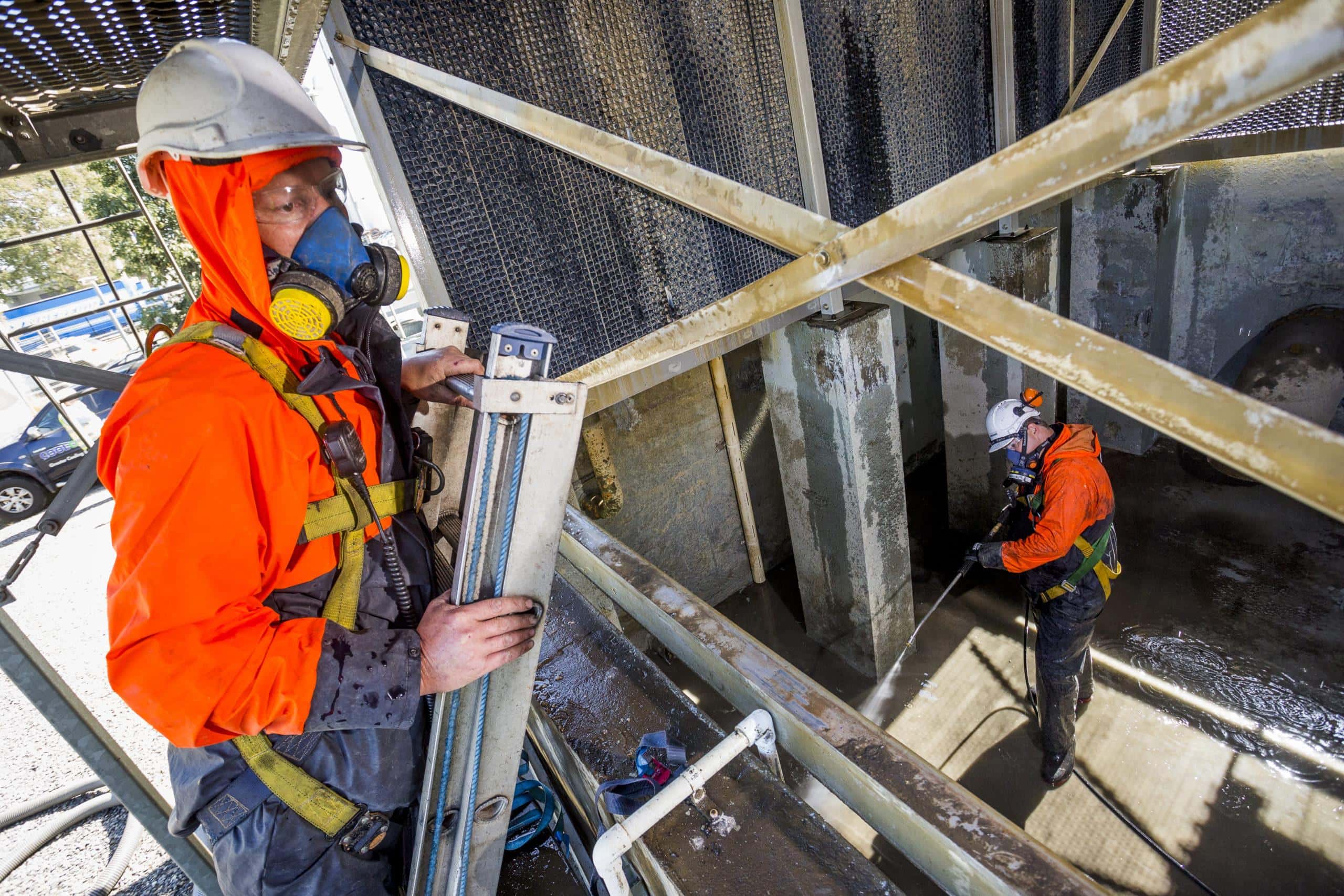
Cooling towers are well-known as the backbone of heat rejection systems in industries, commercial buildings, power plants, and even advanced HVAC facilities. The reason – their ability to ensure stable operating temperatures undoubtedly affects overall energy consumption, productivity and equipment lifespan itself.
But even the best cooling tower will eventually struggle with several performance issues if scheduled cooling tower cleaning is skipped. The result – cooling towers build up scale, sludge, biofilm, algae, and dirt that undoubtedly clog up water flow while minimising heat transfer over time.
Thus, let’s discuss the importance of cooling tower cleaning in industrial and commercial facilities across India, how it improves reliability and when it should be performed in this detailed guide.
Why Is Cooling Tower Cleaning Important?
Every cooling tower continuously circulates large volumes of water while remaining exposed to dust, airborne debris, microorganisms, and minerals. Without proper cleaning, these contaminants easily accumulate throughout the system.
Nevertheless, regular cooling tower cleaning effectively helps:
- Maintain optimal thermal performance
- Improve heat exchange efficiency
- Extend equipment lifespan
- Minimise energy consumption
- Prevent corrosion and scaling
- Support cooling tower safety
- Lower unexpected shutdowns
How Do Dirty Cooling Towers Affect Safety and Performance?
A neglected cooling tower doesn’t simply become dirty but also less efficient and potentially unsafe over a period of time.
1. Scaling:
Mineral deposits build up on heat transfer surfaces, creating insulation that minimises cooling capacity and forces equipment to work way harder.
2. Biofilm Formation:
Bacteria, algae, and microorganisms act as the key players for these neglected cooling towers, forming slimy layers that thoroughly restrict heat transfer while promoting corrosion.
3. Blocked Water Distribution:
Debris can significantly clog nozzles and strainers, resulting in uneven water distribution and poor cooling performance.
4. Legionella Risks:
Warm, untreated water creates ideal conditions for bacterial growth, making Legionella prevention a crucial aspect of regular maintenance.
The Role of Cooling Tower Water Treatment and Inspection
Effective cooling tower water treatment works better with scheduled cleaning to ensure long-term system health. In addition, a well-planned maintenance strategy typically includes:
- Water quality testing
- Chemical dosing
- Scale control
- Corrosion inhibitors
- Microbial control
- Water balancing
Similarly, routine cooling tower inspection is equally important, as it helps teams detect:
- Scaling inside fill packs
- Corrosion on structural members
- Clogged drift eliminators
- Damaged spray nozzles
- Fan and gearbox issues
Cooling Tower Disinfection and System Cleaning
Cooling tower disinfection removes harmful microorganisms that regular cleaning alone might not eliminate, making it non-negotiable, especially before seasonal startup, after extended shutdowns, or whenever potential biological contamination is suspected.
Here’s what a professional cooling tower system cleaning from trusted partners like Tower Tech includes:
- Basin cleaning
- Fill media cleaning
- Drift eliminator cleaning
- Spray nozzle cleaning
- Piping flushing
- Sediment removal
- Biological treatment
- Final disinfection
Together, these activities remarkably improve cooling tower hygiene while restoring system performance.
How Does Cooling Tower Cleaning Improve Heat Exchange Efficiency?
Cooling towers primarily operate by transferring unwanted process heat into the atmosphere. That’s why any contamination on heat transfer surfaces acts as insulation. However, routine cooling tower service helps restore:
- Better water circulation
- Uniform water distribution
- Improved airflow
- Minimal thermal resistance
- Lower energy consumption
How Often Should a Cooling Tower Be Cleaned?
Well, the ultimate answer basically depends on factors like:
- Water quality
- Operating hours
- Industrial environment
- Dust levels
- Process contamination
- Water treatment effectiveness
Nevertheless, here’s a general cleaning frequency you may consider to ensure better cooling tower maintenance:
- Monthly Cooling Tower Inspection – Check for leaks, corrosion, debris buildup and overall system condition.
- Monthly Water Quality Testing – Monitor water chemistry to prevent scaling, corrosion and biological growth.
- Routine Cooling Tower Cleaning (Every 3–6 Months) – Remove dirt, sludge and contaminants to maintain efficient performance.
- Industrial Cooling Tower Cleaning (Every 6–12 Months) – Deep clean internal components to reduce fouling and improve efficiency.
- Annual Cooling Tower System Inspection – Inspect all major components during planned shutdowns to identify wear and support preventive maintenance.
Meanwhile, facilities operating in dusty industrial environments might require slightly more frequent cooling tower services to maintain optimal performance in the long run.
Industrial Cooling Tower Cleaning Best Practices
Effective industrial cooling tower Cleaning involves a lot more than just washing visible surfaces, for instance:
- Shut down the system safely before cleaning.
- Remove sludge, debris, and sediment from the basin.
- Clean fill packs carefully without damaging them.
- Flush piping and water distribution systems.
- Perform cooling tower disinfection using the best treatment methods.
- Restore proper cooling tower water treatment before restarting operations.
Cooling Tower Cleaning Checklist for Industrial Facilities
A structured inspection truly helps ensure nothing is neglected during maintenance. Here’s a practical checklist for better maintenance:
- Clean basin and sump
- Remove sludge and debris
- Clean fill media
- Flush piping
- Inspect drift eliminators
- Clean spray nozzles
- Check fan blades and motor
- Inspect gearbox and bearings
- Apply biological treatment
- Complete cooling tower inspection
- Verify chemical dosing
- Restart and monitor system performance
Plus, incorporating a practical checklist also helps strengthen cooling tower preventive maintenance programmes across industrial facilities.
Why Choose Professional Cooling Tower Cleaning Services?
Although routine inspections can easily be performed by in-house teams, comprehensive cleaning must be handled by experienced professionals, as they provide:
- Specialised cleaning equipment
- Safe chemical handling
- Complete system assessment
- Water treatment expertise
- Compliance with industry standards
- Minimal unexpected operational downtime
Similarly, facilities operating large-capacity systems benefit from custom cooling tower upgradation solutions from trusted service providers like Tower Tech to ensure optimal performance under demanding operating conditions.
Conclusion
Routine cooling tower cleaning is not only a simple maintenance task but also an essential investment for your overall operational efficiency, workplace safety, and long-term equipment reliability. Moreover, clean cooling towers consume less energy, maintain better thermal performance, and support healthier operating environments through efficient Legionella prevention.
Thus, whether you manage an industrial plant, manufacturing facility, commercial HVAC system, or large institutional building, combining regular cleaning, inspections, water treatment, and preventive maintenance will effectively help you ensure top-notch cooling tower performance over the years.
Is declining performance or costly breakdowns also taking a toll on your operations? Then, Partner with TowerTech now to get expert cooling tower cleaning, inspections, upgrades, and comprehensive maintenance solutions!