

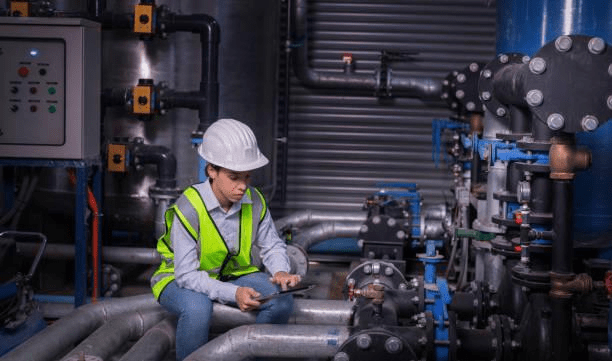
Pharmaceutical manufacturing facilities heavily rely on maintaining precise temperature control. The heat generated through various units like reactors, cleanrooms, vessels, and process equipment must be eliminated efficiently so that the quality of the product does not get compromised, and the production is not hindered. Cooling towers in pharmaceutical manufacturing plants ensure this heat removal at the plant level.
They enable the facility to maintain stable conditions 24/7 by getting rid of waste heat from chillers and process systems. This blog covers how cooling towers for pharmaceuticals accommodate the plants, the processes that are dependent on them, and how they are linked to GMP. Besides their efficiency, you also get to know how pharmaceutical cooling towers by Tower Tech are designed to withstand the challenges of drug manufacturing.
The Role of Cooling Towers in Pharmaceutical Manufacturing
Heat generation is a characteristic of a pharmaceutical plant that occurs at nearly every point. Air cooling for cleanrooms depends on chillers. The temperature stability in reactors as well as jacketed vessels is critical. Compressors, autoclaves, and HVAC systems contribute to heat discharging into the plant’s cooling water.
The cooling tower works as the gate through which this huge heat load is released into the atmosphere. Warm water transports the heat from the chillers and equipment to the tower, a small fraction of the water gets converted to vapor, and the cooled water Next performs its work.
When there is no reliable heat rejection, chilled water temperatures are allowed to rise, cleanrooms become overwhelmed, and at-risk batches remain on standstill. The cooling tower is the one that maintains the entire cooling chain without disruptions.
How a Cooling Tower Fits Into Your Plant’s Cooling Chain
Most pharmaceutical cooling systems operate on a loop consisting of multiple layers. A typical route may look like this:
- Chillers make chilled water for both the cleanroom air handlers and the cooling of the processes.
- Used chillers produce heat on their condenser side.
- Condenser water is employed for transporting the heat to the cooling tower.
- The heat is expelled to the air by the tower via evaporation.
- The cooled water is sent to the chiller condensers, and the operation starts all over again.
This design ensures that tower water is not in contact with any product. For highly sensitive operations, closed-loop process cooling offers an even greater level of separation by tightly encasing the process fluid in a coil while the outside of the coil is being cooled by tower water. It means that the product does not come into contact with the open cooling circuit at any time.
Where Cooling Towers Support Critical Pharma Processes
Cooling tower application in the pharma industry covers far more than comfort cooling. The tower supports the systems that decide product quality.
1. Cleanroom HVAC Cooling
Cleanrooms demand steady temperature and humidity to protect products and meet classification limits. Cleanroom HVAC cooling depends on chillers that run continuously, and those chillers depend on the cooling tower to shed their heat. When the tower performs, your air handlers hold setpoint even through summer peaks.
2. Process and Equipment Cooling
Pharmaceutical equipment cooling reaches across the plant. Reactors, distillation columns, jacketed vessels, condensers, and vacuum systems all need heat pulled away at controlled rates. Stable cooling water lets you hold reaction temperatures precisely, which protects yield and keeps batches within specification.
Protecting Product Quality and GMP Compliance
Cooling water quality matters in a regulated plant. Poorly managed tower water grows scale and microorganisms, and that creates risk for both equipment and validated processes.
GMP compliance cooling systems control these risks by design. Closed-circuit towers and heat exchangers keep process fluids isolated. Strong water treatment controls scale and biological growth. Drift eliminators cut the fine mist a tower can release, which lowers the chance of waterborne contamination around the site.
Documentation matters as much as hardware. A cooling system serving regulated areas needs clear design records and validation support so you can prove control during an audit.
Energy Efficiency and Water Conservation in Pharma Plants
Running pharmaceutical plants 24 hours a day, 7 days a week, makes cooling one of your largest standing energy loads. Making pharmaceutical plants energy efficient starts with a tower that transfers heat effectively.
A clean tower that is well matched to the system for energy efficiency pharma plants enables chillers to work at lower head pressure levels, which directly reduces their electricity consumption.
Water conservation pharmaceutical Industry use forms the other side of the story. Since evaporative cooling leads to water consumption, saving water in the pharmaceutical sector hinges on controlling the tower operation:
- Keep cycles of concentration at an optimum level to minimize blowdown without causing scaling.
- Ensure drift eliminators are in a good condition to prevent unnecessary water loss.
- Process water reuse should be considered after treatment.
- Makeup water monitoring is crucial because a rise in usage signals a problem early.
What I just said measures are designed not only to cut your water expenses but also to reduce your environmental impacts, which aligns very well with the sustainability targets that many pharmaceutical companies nowadays report against.
How Tower Tech Supports Pharmaceutical Manufacturers
Tower Tech cooling towers are engineered for the steady, heavy loads a pharma plant places on its cooling system. You can choose the configuration that fits your duty, from FRP and closed-circuit designs to larger industrial units, all available through Tower Tech’s cooling tower range.
Besides spares, Tower Tech also offers upgradation services, allowing older towers to regain their capacity without an extensive rebuild. Often performance and water efficiency are restored simultaneously just by replacing worn out fill, nozzles, or drift eliminators.
You end up with less spending on your plant’s operation and more extended equipment life and cooling you can prove for compliance. Such a package is precisely what utilities at a pharmaceutical operation look forward to.
Maintaining Cooling Tower Performance in Pharma Facilities
Gradually, a cooling tower loses its ability to perform well, and in a GMP setting, the drift comes with extra cost implications. Keeping efficiency and compliance levels high is doable through regular maintenance.
Routine checks should cover:
- Fill condition, cleaned of scale and biological fouling.
- Even water distribution across the fill, with nozzles clear.
- Drift eliminator condition to limit water loss and aerosols.
- Water chemistry, tested and corrected on schedule.
- Fans, motors, and bearings are inspected for wear and vibration.
Keep an eye out for these indicators:
- Cooling systems or condenser temperatures climb slowly.
- Chillers draw more electricity for the same cooling output.
- Scale or biofilm are found on the fill.
- You need more makeup water to produce changes.
Recognizing these signs beforehand will ensure your production runs smoothly and your audit goes well.
Conclusion
In pharmaceutical plants, cooling towers operate quietly behind every cleanroom and reactor, removing heat that, if left, would degrade product quality. A well-tuned, flowing tower not only keeps your cooling system stable but also helps you stick to good manufacturing practices and, at the same time, smartly limits energy and water consumption. Taking good care of it will result in continuous protection for your yield. Tower Tech offers the engineering and service support needed for that piece of equipment to perform throughout the life span of your facility.
Ready to Strengthen Your Plant’s Cooling System?
We design and manufacture pharmaceutical and process manufacturing cooling towers, and also upgrade the existing ones to regain the lost efficiency.
Whether it is a new setup or just getting the best out of the tower you have, our engineers can be your guides. Contact us today to discuss your cooling requirements and locate the solution that simply fits your facility conditions.