

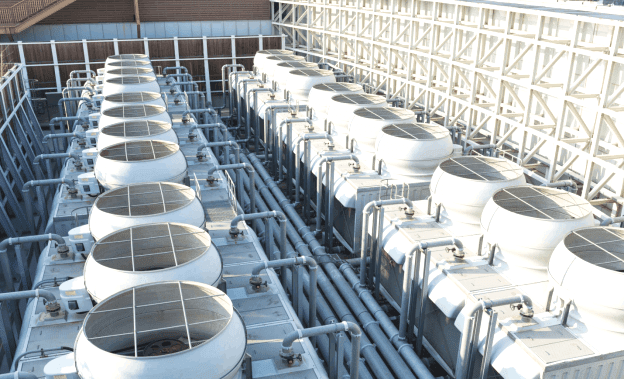
If you walk into any significant industrial area in India at the moment, you will come across the sight of big structures discharging massive amounts of vapour. For decades, these cooling towers have been the silent workhorses of our factories, power plants, and malls. The objects you see are not simple water storage containers which operate with fans.
By the year 2026, cooling tower technology is set to undergo its biggest overhaul in 50 years. As new technologies are developed to conserve water usage and counteract soaring energy costs, modern cooling towers have advanced into complex systems that are more than simply cooling water. The new purpose of cooling towers is to not only cool water but to do so with minimal impact on the environment, which means collecting less energy from the earth and using fewer resources on the ground.
At Tower Tech, we’ve seen these changes firsthand. Here is a look at the major cooling tower trends that are changing the game for Indian industries this year.
The Rise of Smart Cooling Tower Systems
The most significant change to cooling towers by 2026 will occur within the computers that control all their functions. All previous generations of cooling towers could only operate at one (1) speed: “Wide-open” (full speed) operations. This was an enormous waste of energy.
Smart cooling towers are systems that utilize IoT to manage their functions remotely. A smart cooling tower can tell how humid the air is in Mumbai or Chennai at three in the afternoon and adjust its fans accordingly. An intelligent tower will also use sensors to measure the temperature of the water, but it will also measure vibration and how much water is flowing into and out of the tower at any given moment. Thus, the cooling tower works only as long and hard as it has to while being efficient with regards to energy conservation as well as preventing mechanical failures before they happen.
Energy-Efficient Fan and Motor Systems
Fans are the biggest energy hogs in a cooling system. One of the most significant energy efficient cooling towers breakthroughs in 2026 is the widespread adoption of permanent magnet motors and aerodynamically optimized fan blades.
Previously, fans were heavy and required a lot of torque to get moving. Modern blades are inspired by aircraft wing designs, made from lightweight, high-strength materials. When paired with Variable Frequency Drives (VFDs), these fans can slow down during cooler night hours, slashing energy consumption by up to 30-40%. For a large industrial plant, that’s not just a “green” move, it’s a massive boost to the bottom line.
Advanced FRP Materials: Built to Last
In the humid and often corrosive environments of Indian industrial belts, rust is the enemy. While steel was the standard for years, 2026 has seen a total shift toward advanced Fibre Reinforced Plastic (FRP).
Modern FRP isn’t just “plastic.” The material functions as a highly advanced composite which demonstrates complete resistance against decay and corrosion and all forms of chemical assault. The current cooling towers demonstrate a lifespan that extends for multiple decades through their requirement of only basic structural upkeep. The products have reduced weight which simplifies their installation process while eliminating the need for ongoing painting maintenance that steel towers necessitate.
Water-Saving and Low-Drift Designs
Water scarcity is a reality we can’t ignore. Traditional towers often lose a lot of water through “drift”, those tiny droplets that get carried away by the wind.
Today’s latest cooling tower technology includes enhanced drift eliminators (that capture water droplets and return them for recirculation) and upgraded water-saving technologies; longer “fill” designs (the part inside a cooling system where water meets air); and more efficient fill designs (the area inside a cooling unit where water and air interact). All of these developments are part of the energy-efficient cooling tower movement that supports better water management in Indian cities as they grow.
Noise Reduction for Urban Areas
As cities continue to grow, factories and hospitals which are required to have a cooling tower may find that the cooling tower and their respective locations are now surrounded by residential buildings. A noisy cooling tower creates a number of issues; noise litigation and complaints may arise. One of the trends of 2026 will be the use of very low noise (ULN) fans and splash attenuation mats which will allow for high-performing cooling towers to operate in the centre of a bustling city without creating disruption to the neighbours.
Why These Trends Matter for Your Business
You might be wondering: “Is it worth upgrading?” In 2026, the answer is usually a resounding yes. The “payback period” for a modern, efficient tower is shorter than ever because:
- Reduced Operating Expenses: You will use less water and considerably less electricity.
- Decreased Downtime: IoT monitoring will notify you when a component is wearing, long before it breaks.
- Compliance: Modern cooling towers will comply with the new, stricter environmental and water usage standards emerging throughout India.
Final Perspective
The evolution of Tower Tech solutions reflects a wider shift in Indian engineering. We are moving away from “build it cheap” toward “build it smart.”
Whether you are looking at smart cooling tower systems to integrate into your digital factory or simply want to replace an old, rusting unit with a modern FRP model, the technology available in 2026 offers a level of control and efficiency that was impossible just a decade ago.
The goal remains the same, cooling your process, but the way we get there is now cleaner, quieter, and much more affordable in the long run.
Request a Technical Audit of Your Current System